TL;DR
- Stack Overflow’s 2025 Developer Survey found AI usage among developers rising from 76% to 84% while trust in the output fell from 40% to 29%.
- Constant tool churn exposes a weak process that was already there, since a workflow broken by swapping assistants belonged to the tool rather than to you.
- Trust therefore has to sit one layer up, in the checks an output passes through, which is what a rules file is: the part of a setup that survives a model swap.
- The figures have a limit: Stack Overflow surveying its own audience of professional developers, so the direction is more reliable than the magnitude.
In plain English
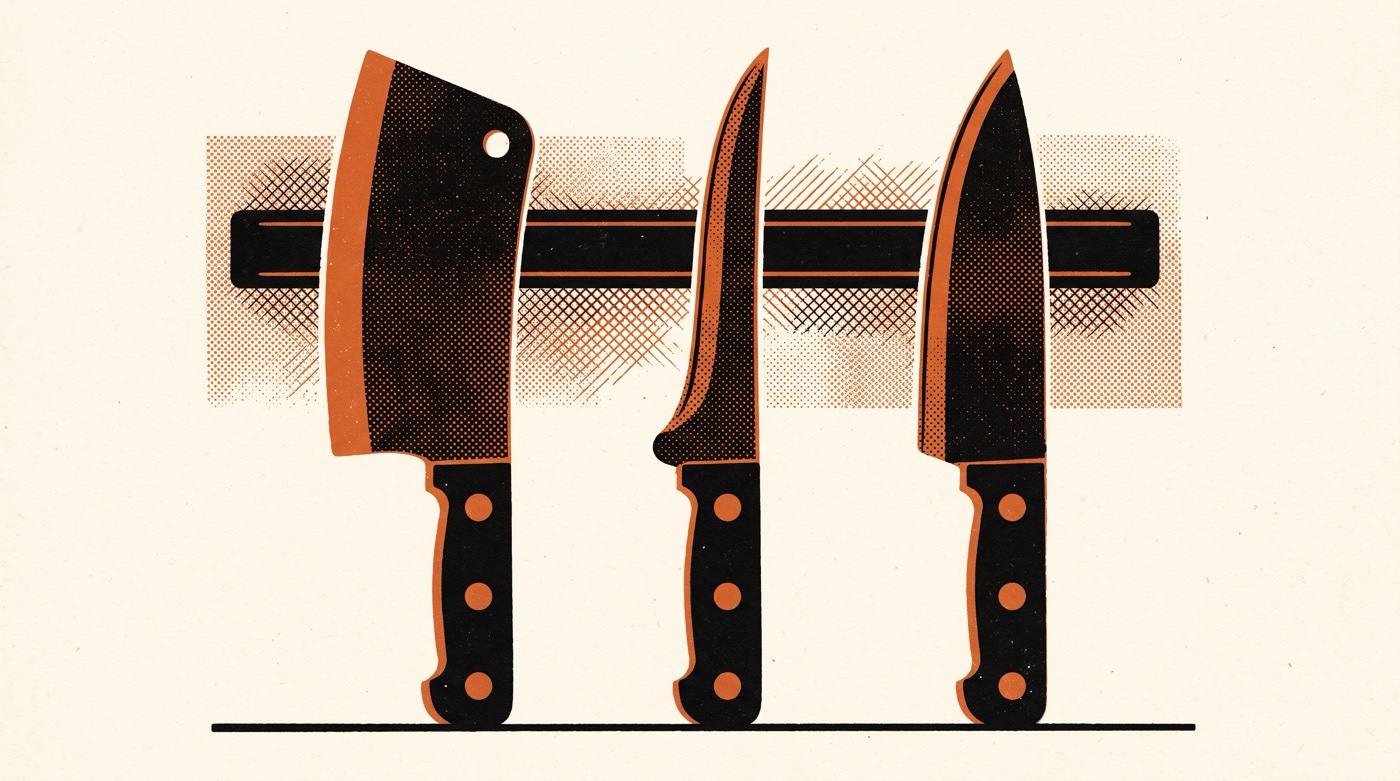
The image is a kitchen knife that keeps changing shape, weight and edge. Coding assistants have behaved that way for two years, with capabilities appearing, quietly regressing, and getting renamed, so nobody builds the muscle memory that long-time Vim and Emacs users have. Stack Overflow’s phrasing is that tool churn “points to a flaw in how you use that tool, the process around it, and the way the tool reinforces the process”. A new assistant will highlight a thin process and will do nothing to fix it.
A rules file is the written record of how you work with a model: what gets checked, what gets reviewed, and what is never allowed through unverified whichever model produced it. Written down, it converts “I trust Claude”, a claim that expires the next time the weights change, into “I trust this output because it came through these checks”, which holds across tools.
Stack Overflow published a piece on 29 July called Developers are attached to tools because tools encode trust. Buried in it is the number I’ve been looking for a clean citation of for months: in their 2025 Developer Survey, AI usage among developers rose from 76% to 84%, while trust in the output fell from 40% to 29%.
Those two lines moving in opposite directions is the whole state of play. More people using it, fewer people believing it. Any story that only tells you one of those numbers is selling something.
The knife that keeps changing shape
The article’s central image is a good one, and I’ll credit it properly because it did the work of an argument. If your kitchen knife kept changing shape, weight and edge, you’d have to relearn it every time — and that’s a hard tool to build trust in.
That is an accurate description of what using a coding assistant has felt like for two years. The thing you learned to prompt in March behaves differently in July. Capabilities appear, quietly regress, get renamed. You cannot build the kind of muscle memory the piece describes Vim and Emacs users having, because the tool isn’t holding still long enough for muscle memory to form.
Where the argument gets genuinely useful is the turn it makes next: the churn also “points to a flaw in how you use that tool, the process around it, and the way the tool reinforces the process.” Tool instability does more than create the trust problem. It exposes one that was already sitting there.
I think that’s right, and I’d put it more bluntly. If swapping your assistant breaks your workflow, the workflow was never yours. It was the tool’s, and you were borrowing it.
Where the trust actually has to live
The practical consequence is that you cannot invest trust in a tool whose shape changes monthly. You have to invest it one layer up, in the process the tool runs inside — what gets checked, what gets reviewed, what is never allowed through unverified regardless of which model produced it.
This is, in the plainest terms, what a rules file is. Not a prompt, and not a productivity hack. It’s the part of your setup that survives a model swap. Written down, it turns “I trust Claude” — a sentence that expires the next time the weights change — into “I trust this output because it came through these checks”, which doesn’t.
The piece frames its own scope as looking at how tools build trustworthy processes, how tool changes highlight but can’t fix broken ones, and where tooling and culture can work together. That middle clause is the one I’d underline. Highlight but can’t fix. A new assistant will show you where your process is thin. It will not do anything about it.
One caveat on the number
The 76→84 and 40→29 figures are Stack Overflow’s own survey of its own audience, which skews toward professional developers who are being asked to ship other people’s code reviews. That is not the same population as a solo operator using AI to get a quote out on a Thursday, and I wouldn’t assume the trust curve looks identical for both. The direction is more interesting than the magnitude.
But the direction is unambiguous, and it’s been holding for a while now. People are using these tools more and believing them less, and the gap between those two lines is exactly the amount of process you’re going to have to build yourself.